
Your puppy's
first week at home.
The foundation checklist — before the habits set. Routine, potty, and the first leash lesson you can do in your living room. And no waiting for the jabs to start.
By Shawn K · Last updated 5 August 2026
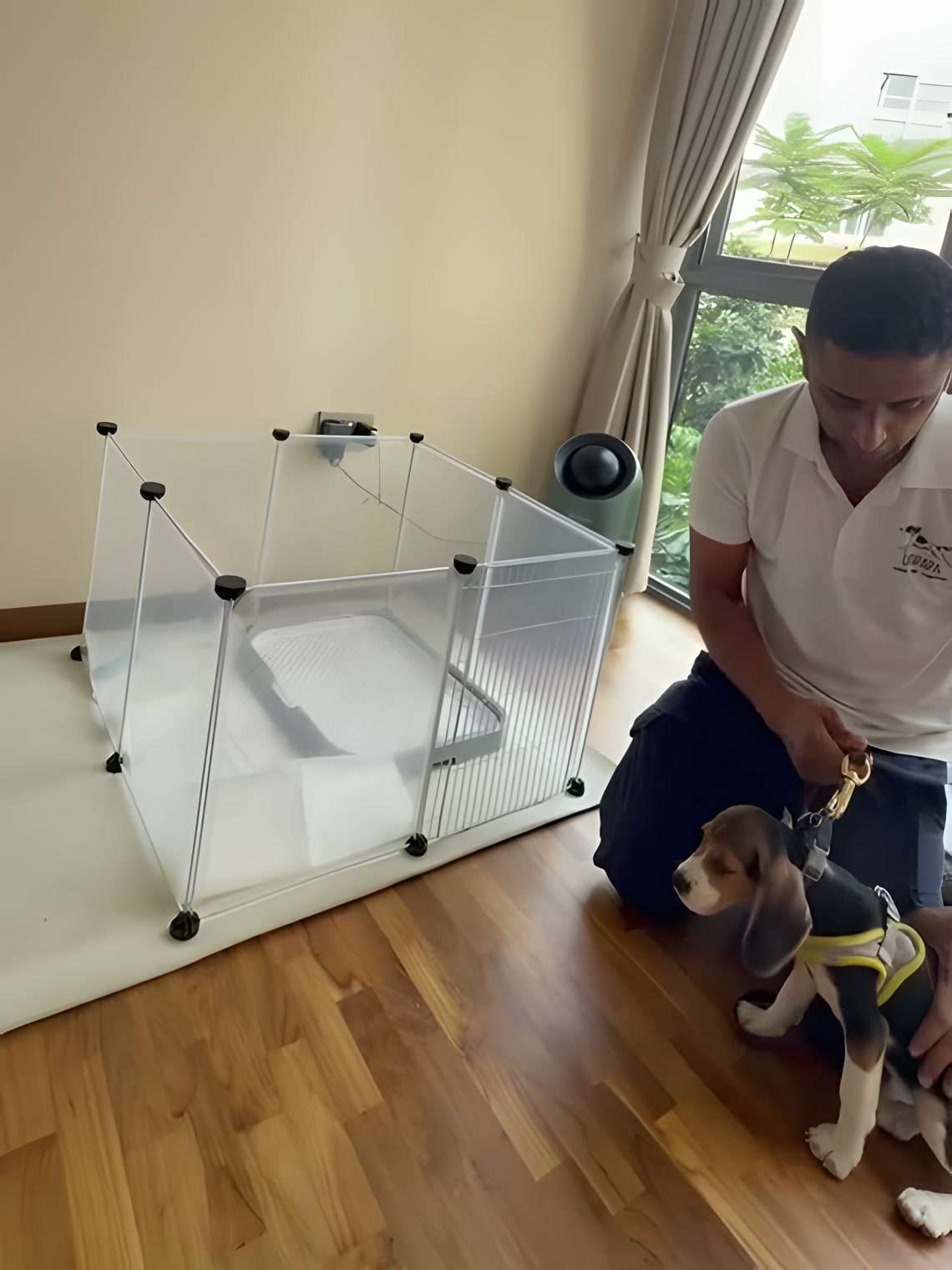
The short version: set the routine before anything else — sleep spot, feed times, and house rules the whole family agrees on. Pick one potty spot and don't change it. Start training indoors on day one, including a first leash lesson in the living room. Don't wait for the vaccinations, and don't wait for something to go wrong. The first six months shape the next ten years.
The wiring starts the week your puppy comes home. You don't need to wait for a problem to appear before you begin.
I'm Shawn — DOGPAPA, in-home dog training across Singapore, and before this a handler with the Singapore Police K-9 Unit working Narcotic Detector Dogs. Here's what to get right in week one, in your own flat, starting day one.
If your puppy hasn't arrived yet, start with the pre-arrival checklist instead.
Set the routine first.
Pick the sleep spot and start crate work on night one. A puppy that settles in the crate sleeps better, travels better, and is calmer at the vet.
Fix the schedule — feeds, sleep and play at the same times daily. A routine they can rely on is one of the things that turns a puppy into a dog who listens later.
Agree the house rules as a family, before they get tested. Most puppy problems come down to clear leadership and consistency. If the sofa is off-limits for you but fine with your partner, your puppy learns neither.
One thing worth knowing early: dogs are very associative. A puppy associates a room, a spot. Change the bed to somewhere else and they won't simply follow it over — dogs aren't like humans, who walk into someone's house and know where the kitchen is. Pick the spot, then keep it.
Potty — pick one spot.
Choose ONE spot — balcony tray, bathroom mat, or the void-deck routine once they're vaccinated. Changing the spot mid-week restarts the clock.
Learn their schedule and their signs. Take them out right after every nap, meal and play, and go to the same place each time. Schedule, signs and consistency are what make it stick — not luck.
Accidents are just part of week one — the routine isn't built yet and the bladder is tiny. Clean it quietly, no telling-off, and tighten the schedule.
Train a dog who listens
because they want to.
Training starts before the jabs are done.
Don't wait for vaccinations to start training. Indoor foundation work can begin as soon as your puppy is home. Outdoor work — corridor, lift, void deck, parks — begins once they're fully vaccinated.
Do the first leash lesson in your living room. Small, quiet exercises: gentle leash pressure to the left, then to the right. When your puppy gives to the leash and it goes slack, release and a calm "good dog." That's it — no walk required.
Stay quiet during the exercise. Don't talk to them while they work it out. Let the leash do the communicating.
Keep it small. It may look very small and minute — like, what is this going to do with my dog? To a puppy, these are very big things they're learning. Dogs are not like humans; you have to teach them every single thing.
It's the same groundwork behind loose-leash walking later on — you're just starting it before your puppy is big enough to pull.
Socialisation starts inside.
Socialisation isn't the same as meeting other dogs. It's exposure — and a first-week puppy can start learning that the world is safe from inside your flat, on your schedule.
Watch for biting and mouthing. Normal at this age — but the way you respond now sets whether it stops at five months or carries on into adolescence. This is the first thing worth getting right with a trainer, because the wrong response rehearses the habit. It's covered in session one.
If you only do three things today.
- Pick the potty spot — and don't change it.
- Set the sleep spot and the schedule — tonight, not next week.
- Five quiet minutes of leash pressure in the living room.
Week one, answered.
What should I do in my puppy's first week at home?
Set the routine first — sleep spot, feeds and play at the same times daily, and house rules everyone in the home agrees on. Pick one potty spot and don't change it. Start indoor training from day one, including a first leash lesson in the living room. Don't wait for something to go wrong before you begin.
Can I start training before vaccinations are complete?
Yes. Indoor foundation work can begin as soon as your puppy is home. Outdoor work — the corridor, lift, void deck and parks — begins once they're fully vaccinated. The first week is entirely an indoor job, so nothing is lost waiting on the jabs.
How do I potty train a puppy in an HDB flat?
Choose one spot — a balcony tray, a bathroom mat, or a void-deck routine once your puppy is vaccinated — and keep it. Changing the spot mid-week restarts the clock. Take them out on a tight schedule after every nap, meal and play, learn their signs, and clean accidents quietly without telling them off.
How do I do a first leash lesson indoors?
In your living room, with nothing to pull towards. Gentle leash pressure to one side, and the moment they give to it and the leash goes slack, release and say a calm "good girl." Then the other side. Stay quiet and let the leash do the communicating. No walk required.
Is socialisation just meeting other dogs?
No. Socialisation is exposure to the everyday world, and a first-week puppy can start learning the world is safe from inside your flat, on your schedule — long before they meet another dog.
My puppy is biting and mouthing — is that normal?
Normal at that age — but how you respond in the first weeks decides whether it stops at five months or carries on into adolescence. The wrong response rehearses the habit, which is why it's the first thing worth getting right with a trainer. See puppy training in Singapore.
Week one is the cheapest week to get right.
I can give you the foundation — but only you live with them. That's why I don't train your puppy; I train YOU to train your puppy, in your own home, and the skills stay for life. Tell me your puppy's age and what's happening, and I'll tell you honestly where I'd start.
Tell me about your puppy